
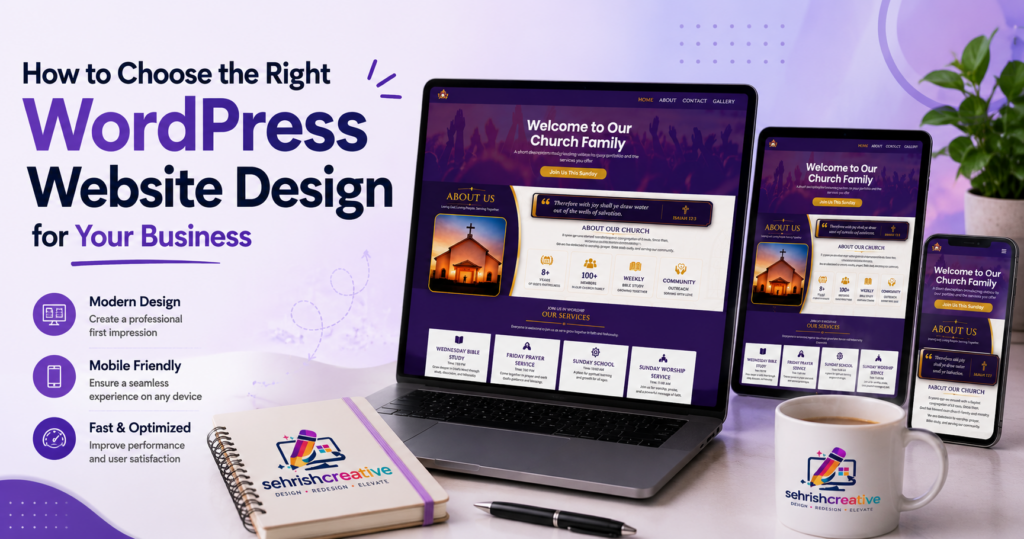
A website is more than just an online presence—it represents your business, builds credibility, and helps potential customers decide whether they can trust your brand. In today’s digital world, many people visit a company’s website before making a purchase or contacting the business. That is why choosing the right WordPress website design is one of the most important decisions you can make.
WordPress powers millions of websites because it offers flexibility, scalability, and ease of management. However, simply installing WordPress is not enough. Your website should be designed with your audience, business goals, and user experience in mind.
This guide explains the key factors you should consider before choosing a WordPress website design that supports long-term business growth.
Understand Your Business Goals First
Before selecting a theme or planning your website layout, define what you want your website to achieve.
Ask yourself questions like:
- Do you want more customer inquiries?
- Are you planning to sell products online?
- Do you want to showcase your portfolio?
- Is your goal to generate leads through contact forms?
When your website is designed around clear business goals, every page has a purpose and every section helps visitors take the next step.
Put Your Visitors First
A professional website is not designed only for the business owner—it is designed for the people who will use it.
Think about what your visitors expect when they land on your website.
Can they quickly understand what you offer?
Can they easily find your services, pricing, or contact information?
A visitor should never have to guess where to click next. A clean structure, readable text, and simple navigation create a better experience and encourage users to stay longer.
Choose a Clean and Professional Layout
Modern website design is based on simplicity.
Instead of filling every section with animations, colors, and unnecessary elements, focus on creating a layout that feels organized and easy to read.
A professional WordPress website usually includes:
- A clear hero section
- Service highlights
- About the business
- Client testimonials
- Portfolio or recent work
- Frequently Asked Questions
- Contact section
Each section should guide visitors naturally toward contacting your business.
Make Mobile Experience a Priority
More than half of website visitors now browse using smartphones.
If your website is difficult to use on mobile devices, visitors may leave within seconds.
A responsive WordPress website automatically adjusts its layout for desktops, tablets, and mobile phones. This improves usability and supports better visibility in search engines.
Always test your website on different screen sizes before publishing it.
Website Speed Directly Affects User Experience
Fast websites keep visitors engaged.
Slow websites increase bounce rates and may reduce conversions.
Some practical ways to improve speed include:
- Compressing images before uploading them
- Choosing reliable hosting
- Using lightweight WordPress themes
- Installing only essential plugins
- Optimizing website caching
Performance should always be considered during the design process, not after the website is completed.
Build Trust Through Design
People trust websites that look professional.
Simple details can make a significant difference, including:
- Consistent branding
- Easy-to-read typography
- High-quality original images
- Secure HTTPS connection
- Clear contact information
- Customer reviews or testimonials
Trust is built through many small design decisions rather than one impressive feature.
Create Clear Calls to Action
Every important page should encourage visitors to take action.
Examples include:
- Request a Quote
- Contact Our Team
- Book a Free Consultation
- View Our Portfolio
Your call-to-action buttons should be easy to notice without overwhelming the page.
Design With SEO in Mind
A visually attractive website is valuable, but it should also be discoverable through search engines.
An SEO-friendly WordPress website generally includes:
- Proper heading structure
- Fast loading pages
- Mobile responsiveness
- Optimized images with descriptive alt text
- Internal links between related pages
- High-quality content that answers users’ questions
SEO works best when it is considered during the website planning stage rather than added later.
Mistakes to Avoid
Many business websites lose potential customers because of avoidable design mistakes.
Some of the most common include:
- Too much text on the homepage
- Confusing navigation menus
- Poor mobile optimization
- Slow loading pages
- Low-quality stock images
- Missing contact details
- No clear action for visitors
Avoiding these issues creates a smoother experience and improves the overall effectiveness of your website.
Why WordPress Remains the Best Choice
WordPress continues to be one of the most trusted website platforms because it combines flexibility with long-term scalability.
Businesses choose WordPress because it offers:
- Easy content management
- Thousands of customization options
- Strong SEO capabilities
- Integration with marketing tools
- Support for blogs, portfolios, and online stores
- Regular updates and a large global community
Whether you are launching your first website or redesigning an existing one, WordPress provides the flexibility needed to grow alongside your business.
Final Thoughts
A successful website is not built around trends—it is built around the needs of your audience.
Choosing the right WordPress website design means creating a website that is fast, responsive, easy to navigate, and focused on helping visitors achieve their goals. When thoughtful design is combined with useful content and strong SEO practices, your website becomes a valuable business asset that continues to generate opportunities over time.
If you are planning a new business website or looking to improve your current one, investing in a professional WordPress design today can help you build stronger credibility, improve customer engagement, and support long-term online growth.
Frequently Asked Questions
Is WordPress suitable for small businesses?
Yes. WordPress is an excellent choice for small businesses because it is flexible, cost-effective, and can grow as your business expands.
How important is mobile-friendly design?
It is essential. Most users browse websites on mobile devices, and Google also considers mobile usability when evaluating websites.
Can a good website design improve SEO?
Yes. A fast, responsive, and well-structured website supports SEO by improving user experience and helping search engines understand your content more effectively.
How often should a business website be updated?
Review your website regularly. Update content, images, plugins, and security features to keep the site accurate, secure, and relevant.